
Working Visit to Amman, Jordan: Exchange on Phantom Technology
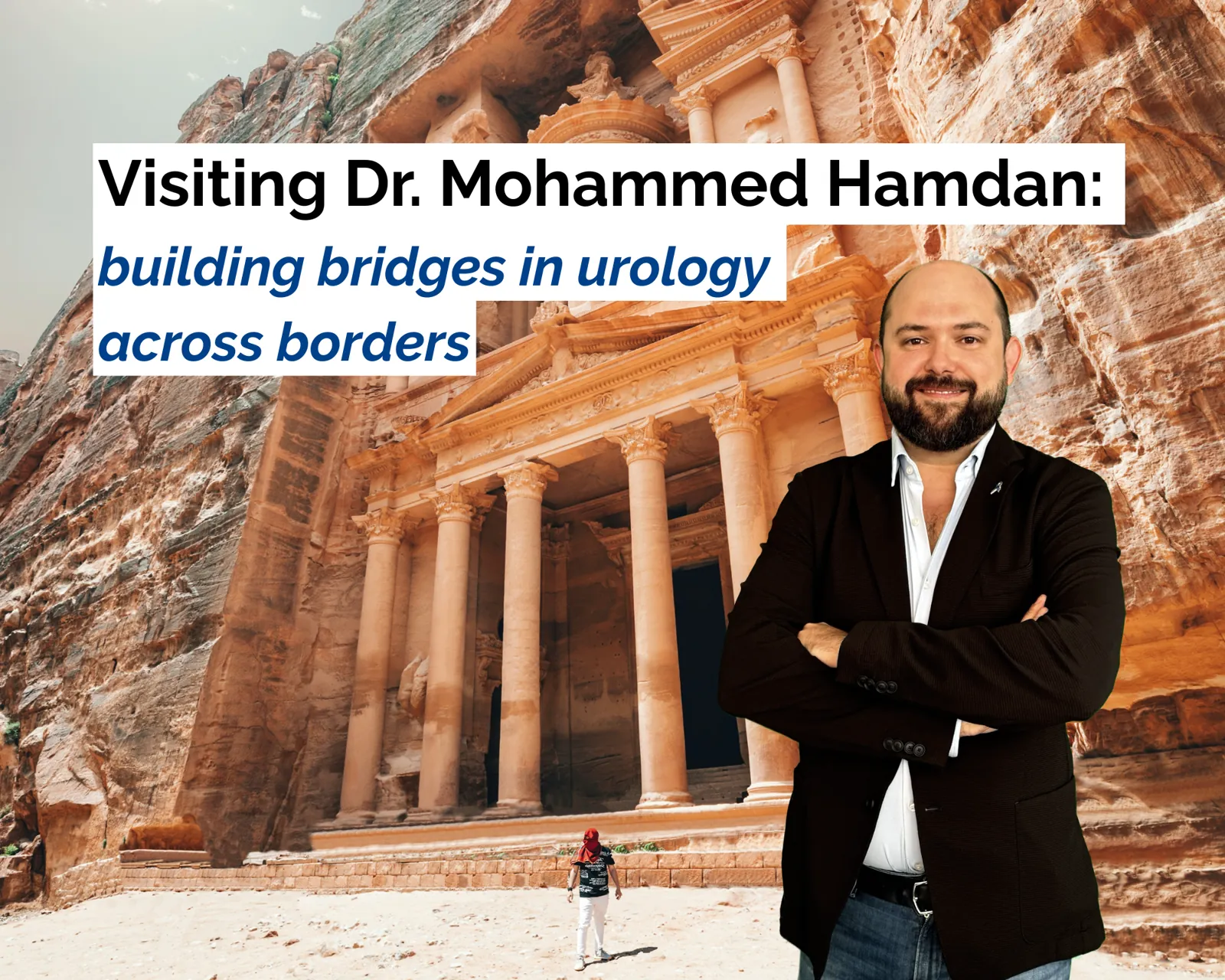
This week I returned from Amman, Jordan, after a four-day work visit to Dr. Mohammed Hamdan, a urologist specializing in penile prosthesis surgery.
How This Visit to Jordan Came About
I met Dr. Hamdan at an international conference in Zaragoza. As two urologists working in completely different healthcare systems, we recognized in each other the same curiosity: How does a colleague in another part of the world tackle a problem that you yourself deal with on a daily basis? Dr. Hamdan is internationally recognized for his Phantom technique in penile prosthesis surgery, an approach I wanted to learn more about—directly from him.
An initial visit was scheduled for April 2026. It was canceled. Given the geopolitical situation in the region at the time, traveling was not a responsible choice. I have a responsibility to my patients, my family, and my friends, and under those circumstances, postponing the trip was the right decision, even though it wasn’t an easy one.
What has stayed with me ever since says just as much about this collegial bond as the visit itself: Dr. Hamdan’s understanding and his willingness to revisit the plan as soon as the time was right.
Four Days in Amman Focusing on Phantom Technology
From August 13 to 16, I was in Amman for a direct clinical exchange focused on the Phantom technique, as well as discussions about complex cases, surgical decision-making, and how healthcare is organized in our respective contexts.
It wasn't a one-way street. I spent time with Dr. Hamdan and his team at their Center of Excellence for Penile Implants in Amman: I observed his approach in the operating room, compared techniques, and discussed with him the cases for which there are no easy answers. We each bring expertise that the other lacks, shaped by different healthcare systems and different patient populations.
Why this is relevant to my practice in Brussels
Brussels is one of the most diverse cities in Europe, with a significant population of Middle Eastern origin. Conversations with colleagues from that region—about how healthcare there combines cultural sensitivities with clinical practice, and about what exactly prevents patients there from seeking help—directly inform how I interact with my own culturally diverse patient population here.
What Sticks With You
What has stayed with me the most isn’t any one specific technique. It’s the realization that patients deserve the same quality of care everywhere, and that this can only be achieved when specialists continue to learn from one another across boundaries, rather than remaining in their own bubbles.
To Professor Hamdan and his team: thank you for your openness and hospitality. This is exactly the kind of exchange I want to continue fostering.
A question about your situation?
A few questions are enough to see whether a consultation with Dr Ward is right for you.
Read also
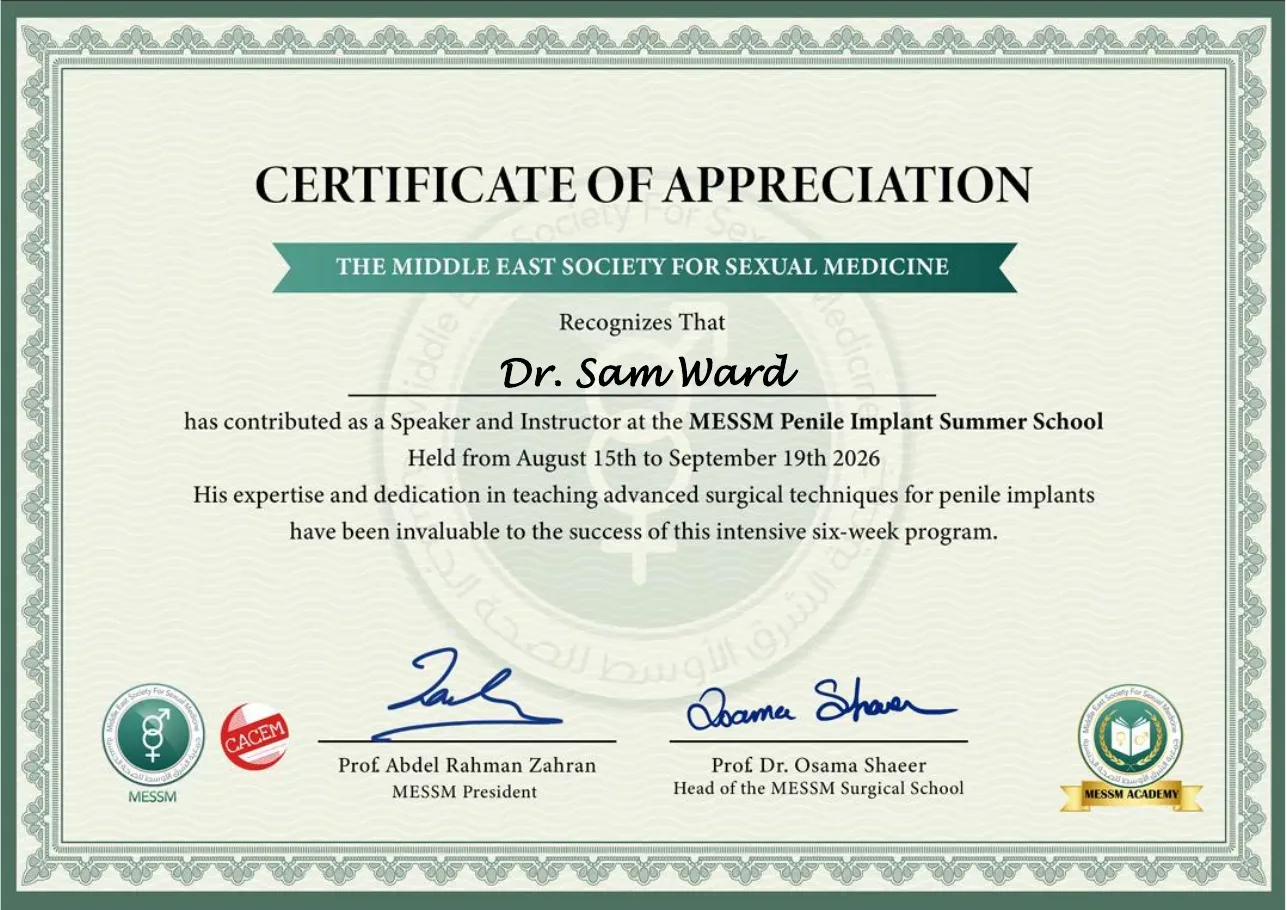
Certificate of Appreciation from MESSM for the Penile Implant Summer School 2026
The Middle East Society for Sexual Medicine thanks Dr Sam Ward as speaker and instructor at the MESSM Penile Implant Summer School 2026.
Read more →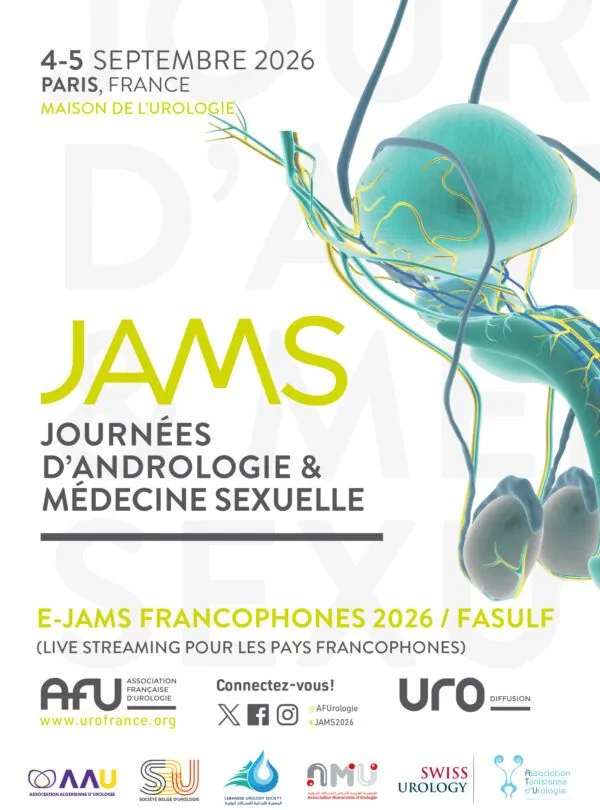
Focus on Delayed Ejaculation and Anorgasmia at JAMS Paris
At JAMS in Paris, I’ll be speaking about two conditions that don’t get enough attention: delayed ejaculation and male anorgasmia. I’ll also be there on…
Read more →Sexual Dysfunction and Rehabilitation After Prostate Cancer
A patient told me that he waited 16 years before he discovered that penile prostheses existed. That testimony at the Europa Uomo Academy confirms why I…
Read more →