
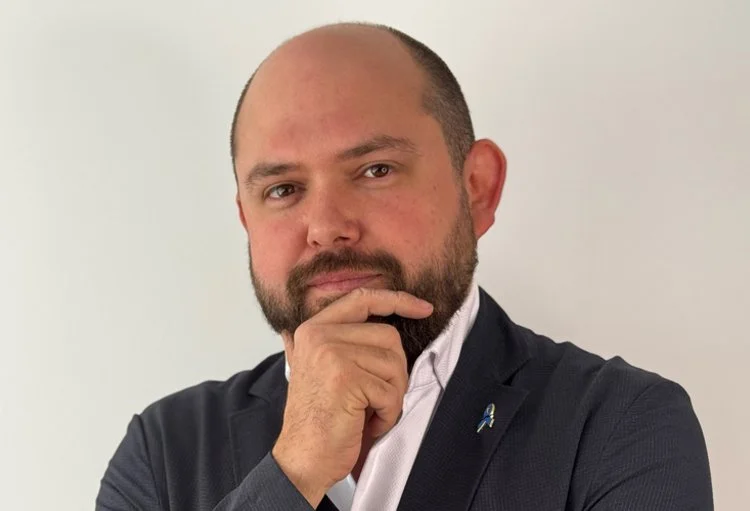
by Dr. Sam Ward – The Specialist
An overwhelming majority of Belgian doctors say they have lost confidence in Minister Vandenbroucke. The results of the survey conducted by Medi-Sphère and Le Spécialiste send a strong message from the field. If the framework law is adopted without changes, this will inevitably lead to a rift between the medical community and the political world.
What Vandenbroucke proposes as a “modernization” of the healthcare system is viewed by doctors as an affront to the dignity of their profession. The framework law puts an end to dialogue and cooperation and introduces a governance model based on mistrust and control. According to the survey, 71% of doctors believe that this law fundamentally undermines the freedom of medical practice. Eight out of ten doctors are calling for its complete repeal and rewriting. This is not just a whisper in the background, but massive opposition.
One of the key provisions of this law is the infamous “letter of assignment,” which grants the government the authority to unilaterally set priorities in the field of health care, even before the consultative bodies have a chance to weigh in on the matter. As a result, the Insurance Committee loses its decision-making authority, and doctors are reduced to mere executors of political directives.
A Convenient Framing The minister justifies this course of action using terms such as “budgetary discipline,” “exceeding the budget,” and “spending control.” The implication is clear: it is the doctors who are putting pressure on the system. This negative approach is lazy. The real causes of the rise in spending are structural: the aging population, the increasing complexity of healthcare needs, and a chronic shortage of government funding.
The framework law represents a new step in the gradual erosion of the consultative model. Where cooperation is to give way to governance, every form of participation is being further undermined. A striking example of this is the link drawn between the funding of medical unions and the percentage of members covered by a collective bargaining agreement.
The minister also wants to be granted the authority to unilaterally limit fee surcharges—without a parliamentary debate. Even the RIZIV number, the cornerstone of professional practice, is now under threat. For a majority of doctors, this threat is just as concerning as the restriction on their right to set their own fees. This would result in nothing more than imposed uniformity, without taking into account reality, context, or medical reasons.
Young talent is being discouraged Another equally concerning finding: 83% of the doctors surveyed fear that the draft bill will discourage young colleagues from settling in or remaining in Belgium. Against the backdrop of a growing shortage of doctors, discouraging new talent amounts to a structural weakening of the system. What young doctor would still want to practice a profession in which autonomy is replaced by control and commitment is viewed with suspicion?
The consequences will be felt by patients. When doctors become demotivated and leave the profession, institutions come under pressure, and the profession loses its appeal, a two-tiered system emerges: private care for those who can afford it, and public care with longer wait times and fewer options for everyone else.
Silence Is Complicity What makes this attempt to silence doctors even more bitter is the contrast with the minister’s own rhetoric. During a recent parliamentary debate, Irina De Knop (Open Vld) accused him of “Trump-like behavior”: consultation has turned into a monologue, and politics is permeated by mistrust. Vandenbroucke denied this and promised a dialogue, but in practice, the opposite is happening.
Apart from a few parliamentary statements, the response from the coalition partners remains disappointing. Who is standing up for the doctors today? The political parties that are letting Vandenbroucke have his way are, in a sense, complicit. Remaining silent means legitimizing a policy that goes against the very essence of health care: trust, cooperation, and shared responsibility.
Not Pawns in a Power Game The study leaves no doubt that, in practice, doctors are willing to take action. Doctors are not pawns in a power game. They are the guardians of public health, trusted confidants of patients, and bearers of knowledge and responsibility. The framework law completely ignores this and reduces doctors to puppets of the government.
What doctors are asking for today is not a privileged position. What they are demanding is fundamental respect. And on that point, there can be no compromise.