
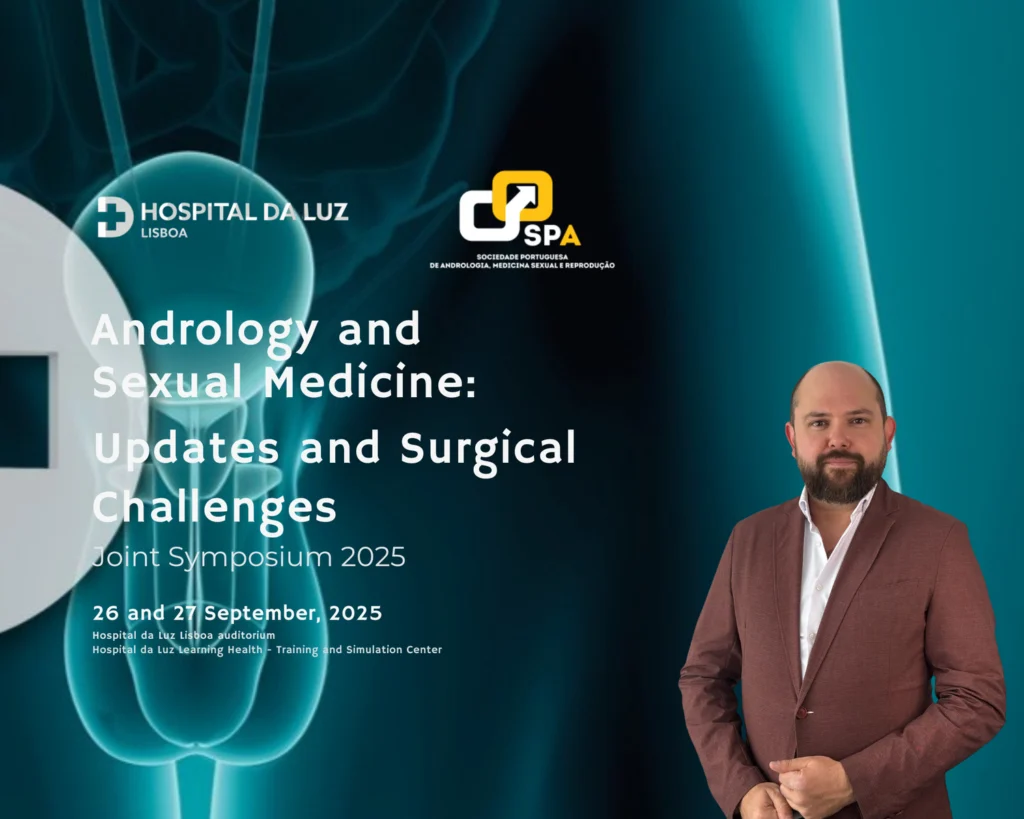
I am very pleased to be able to participate in the professional conference “Andrology & Sexual Medicine: Updates and Surgical Challenges,” which will be held on September 26 and 27, 2025, in Lisbon, organized by the Portuguese Society of Andrology, Sexual Medicine, and Reproduction (SPA), in collaboration with Hospital da Luz.
This symposium combines the 2nd Andrological Surgery Workshop with the SPA’s annual symposium and offers a comprehensive scientific program: live surgeries, in-depth discussions, and presentations on the latest innovations and challenges in the surgical treatment of male sexual disorders.
My Most Important Interventions
I would be delighted to speak on the following topics:
- Prevention of Penile Shortening and Curvature After Radical Prostatectomy (Post-RP Shortening & Straightening)
- Combination of a penile prosthesis and an artificial sphincter implant (AUS) for complex cases of erectile dysfunction and associated incontinence
These surgical techniques require a high degree of precision and a comprehensive understanding of function—not only anatomical, but also sexual and psychological.
What I Contribute and What I Hope For
I think it's important to share:
- My experience with complex clinical cases
- Short- and long-term functional outcomes according to the techniques used
- Criteria for patient selection to optimize satisfaction and minimize complications
In addition, I would like to learn from my Portuguese and international colleagues how to balance surgical innovation, safety, consistency in practices, and patient expectations.
Why This Symposium Is Important
- It addresses a critical need for the exchange of knowledge among andrologists and surgeons who deal with rare, non-standardized conditions.
- He highlights new surgical challenges, such as side effects following radical prostatectomy or combinations of treatments when erectile dysfunction is accompanied by incontinence.
- It reinforces the idea that sexual medicine for men should evolve toward more integrated approaches: surgery, rehabilitation, psychometric follow-up, and attention to the patient's expectations.